
Structural Drying
Following repair of a central heating leak or water mains leak, accredited drying technicians carry out professional structural drying to remove excess moisture, prevent mould growth, and prepare properties for reinstatement. The process is coordinated as part of your insurance claim to ensure everything runs smoothly from detection to recovery.
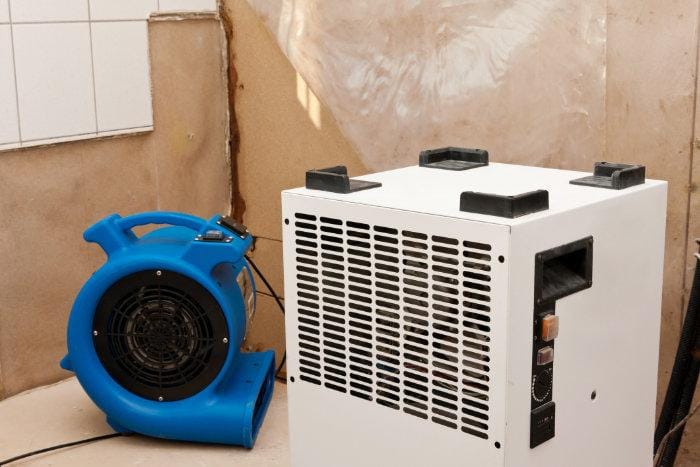
Why Fast Structural Drying Matters?
Excess moisture can quickly seep into walls, floors and ceilings. Without timely structural drying, it can cause:
Trapped moisture damages walls, floors and ceilings
Mould develops quickly and spreads
Poor air quality and musty odours
Hidden moisture weakens finishes and fixings
Repairs cost more when drying is delayed
Acting quickly limits long-term damage and supports safe, effective restoration.
Our Structural Drying Process
When water damage occurs, a fast, methodical drying process is essential to prevent secondary moisture damage, mould, and costly structural issues. That’s why specialist British Damage Management Association (BDMA) or Institute of Inspection, Cleaning and Restoration Certification (IICRC) accredited drying contractors are appointed to use advanced drying equipment, monitor progress closely, and provide insurer-ready documentation at every stage.
Water Extraction
Standing water is removed quickly and safely, preventing further absorption into walls, floors, and ceilings.
Weekly Moisture Monitoring
Surfaces and cavities are checked with calibrated meters. Readings must trend to target levels before sign-off.
Dehumidifiers, Heaters & Fans
Appointed professional drying technicians set up controlled drying with monitored airflow and temperature.
Drying Completion Certificate
On completion, you’ll receive a certificate with meter readings and photos for insurers and restoration contractors.
If instructed to deal with your claim, we’ll coordinate approved drying and mitigation works through our network of professionally accredited technicians to help prevent further damage as soon as possible.
Damp or Rising Damp?
Not all “damp” is the same. Many cases are caused by hidden leaks, while others are true rising damp. Salt testing helps tell the difference: treated mains water leaves chloride traces (typical of a plumbing leak); rising damp is usually associated with ground salts such as nitrates. Proving which one it is guides the right fix and what insurers will consider. Rising damp is not an insured peril and would not be accepted by insurers.
Did you know?
Persistent moisture can lead to mould growth and affect indoor air quality. Health groups warn it can worsen asthma and allergies. Early leak tracing and structural drying reduce risk and damage.
Health check: what the NHS says about damp & mould
Damp and mould aren’t just cosmetic - they can trigger asthma, allergies, and eye or skin irritation, with babies, children, older people and anyone with breathing or immune issues most at risk. Reduce moisture by ventilating, using extractor fans, and avoiding drying clothes indoors, and keep rooms warm to prevent condensation. Most importantly, fix the source by tracing leaks and completing structural drying where required. For full guidance, see the NHS advice on damp and mould.
Proving It’s Not Rising Damp – The Power of Salt Testing
Did you know?
Insurers often assume damp patches are caused by rising damp a non-insured issue. In reality, most are the result of hidden plumbing leaks. Salt testing provides scientific evidence to tell the difference.
Mains water leaves chloride traces, confirming an escape of water and therefore a valid insured peril. By contrast, nitrates in the sample indicate true rising damp. This simple test helps insurers make fair decisions - based on evidence, not assumption.
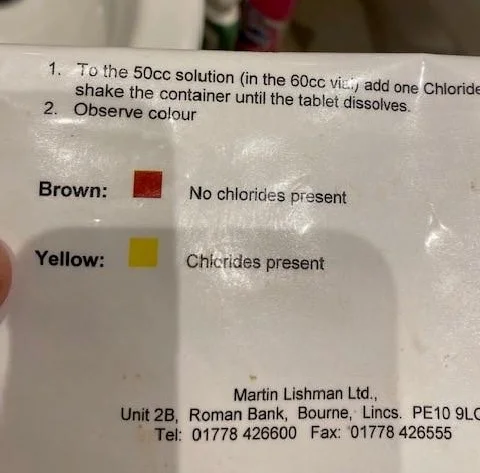
Test methodology for chlorides
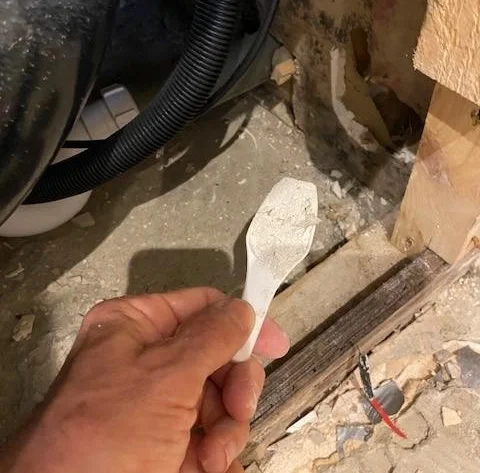
Sample taken from wall plaster
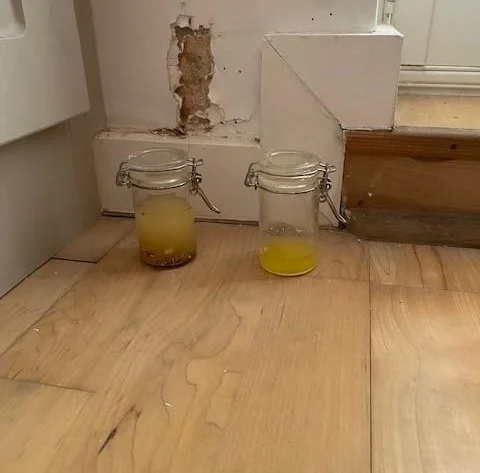
Found positive for chlorides and negative for nitrates (proving leak from plumbed water in property)
Customer Reviews
Leak Tracers Direct has more positive reviews than any other leak tracing company. Take a look at our customer reviews page, or click on the logos below to see our reviews.






S. Charania - 27 Sep 2025 ★★★★★
Super Service
I am an overseas landlord. My tenant’s ceiling collapsed from a bath-mixer leak. APC ran the claim, arranged drying and full restoration, and managed it all while keeping me informed remotely. Couldn’t have done it without them.
Aziza - 13 Sep 2025 ★★★★★
Leak Found
Great company to know in a time of difficulty. When no one else could find the leak, they manage to find it in less than three hours.
Kavajer - 12 Sep 2025 ★★★★★
Excellent
The sudden appearance of ceiling stains was stressful. Leak traces identified the leak and produced a detailed report so the leak could be exposed and repaired. Then their claims team at allpropertyclaims worked with my insurer to approve and cover drying and reinstatement. The whole thing cost me nothing, and my home was back to normal quickly.

Robert Luke - 27 Aug 2025 ★★★★★
Extremely happy with leak tracers! And only wish I had found them sooner. They helped me find an impossible leak. I had first contacted 2 plumbers who tried to find the leak but were not able to. Having wasted money on these plumbers I was advised by my insurer to get a specialist leak detection company.
Amit Joshi - 27 June 2025 ★★★★★
Truth is, words cannot say just how brilliant a service that Tan and the super APC team provided from initial assessment to sterling completion. Indeed, Tan and the team assured supreme service, professionalism, guidance and support at every stage of my claim and that is exactly what they delivered
Ian Belnikoff - 31 March 2025 ★★★★★
Following the failure of three different plumbers to locate a leak in my bathroom, I made contact with Moez who arranged for an expert to visit my property with specialist detection equipment. The source of the leak was quickly found and a temporary repair effected which required the bathroom floor to be partially
Our Team
Our people are at the heart of everything we do. Once a trusted specialist engineer has located your leak, dealing with the aftermath of water damage can be your biggest challenge. From the very start, you’ll be supported by a dedicated surveyor who coordinates damage assessment, meets with the insurer’s loss adjuster, and oversees approved repairs through our trusted contractor network.
You’ll also have a dedicated claims manager who liaises with your insurer to present your claim, agree approved works, and ensure a fair outcome and a smooth, stress-free process from start to finish.

Georgie Hardy
Call Centre Manager

Tanbir Sidhu
Head of Business Development

Steve Guest
Surveyor
Benefits of Choosing Us
Choosing the right drying and claim support service can save you thousands in repair costs and weeks of stress. Here’s why homeowners and businesses trust us:

Save Money
Avoid costly property damage and easily claim back eligible leak detection costs through your insurer where cover applies for complete peace of mind

Stress Less
We coordinate everything - from helping you arrange leak detection to guiding your insurance claim and organising approved restoration works

Accredited Specialists
Drying is completed by professionally accredited drying contractors using controlled methods tailored to your property for safe, effective results

FCA Regulated
Through our FCA-regulated firm, your claim is handled with fairness and transparency, giving you complete peace of mind throughout the process
Complete Property Recovery
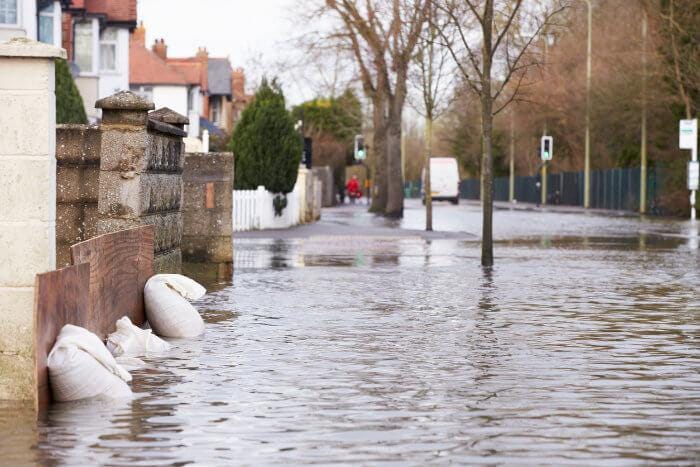
We don’t stop at leak tracing. Once the cause is exposed and the leak is stopped, specialist accredited drying contractors carry out drying, followed by approved reinstatement contractors. Claims managers liaise with your insurer to agree scope, drying, and reinstatement so works progress in the right order.
You benefit from:
Less disruption and faster turnaround
Evidence-led approvals (readings, photos, reports)
Cost-effective reinstatement, not exploratory works
Frequently Asked Questions
We know insurance claims can feel overwhelming, especially if it’s your first time dealing with one. That’s why we’ve put together this FAQ section - to answer common questions, explain the process in plain English, and show how our expertise makes the journey smoother and less stressful for you.
What is applied structural drying (ASD) ?
Applied Structural Drying is a professional method used after leaks or floods to dry a building’s structure quickly and safely. It combines controlled air movement, dehumidification, heat, and continuous moisture monitoring to remove water from materials like timber, plaster, and concrete. ASD helps prevent mould, reduce repair costs, and restore properties faster without unnecessary demolition.
How to tell if water damage is structural?
Look for warping, cracks in tiles, sagging floors or ceilings, sticking doors, or rotten timber. These signs suggest the building’s structural integrity may have become compromised as a result of your leak. It is important in such case to properly dry the fabric of the building before replacing flooring, tiling or decorating.
What is an Insured Peril?
An insured peril is a specific, unpredictable event that is covered by an insurance policy. For example a leak from a pipe qualifies as an insured peril, however maintenance related issues such as a failed sealant or grouting around shower trays and baths would not qualify.
Case Studies
Our case studies show how structural drying resolves hidden moisture after leaks. From damp walls to unexplained damage, controlled methods and monitored readings bring properties back to normal with minimal disruption. Explore the examples below to see clear, evidence-led outcomes.
Central London
Structrual drying after leak exposed
Incident
The homeowner noticed paint work bubbling on a bedroom wall just above his skirting. Behind this wall was his bathroom so he assumed there was a leak from the bathroom but it could also have been from his central heating pipes under his bedroom floor. There was no sign of any damage or leak in his bathroom which was fully tiled. He first called a regular plumber but no leak was found. He then called his insurer who said that unless a leak is found and the cause of water damage is established, no claim could be set up or progressed. Eventually he contacted us and a specialist leak detection engineer, using various different non-invasive methods, located the leak from a basin feed pipe situated just under the tiled floor. The leaking pipe was subsequently exposed with minimal damage and he was able to stop the leak.
Client Concerns
When it came to repairing the resultant water damage, his insurer was suggested that the only work needed was to relace a small section of the bathroom floor tiles and to stain block and paint the wall section in the affected bedroom. Their loss adjuster’s argument was that as “visible damage” was minimal , there was no need to lift the flooring or remove wall plasterboard. Our client was concerned that even though the damage was not obviously visible there may be a lot of moisture trapped in his walls and under his floor. He was concerned that not properly addressing this moisture may result in his sub floor and timber structure becoming compromised over time. This was his home and he wanted it to be restored fairly under insurance. He did not want the value of his property to be negatively affected due to trapped moisture within the fabric of the building.
Finding the Leak and dealing with the Insurance Claim
A professionally accredited technician was able to show high moisture readings to demonstrate how wet the sub floor and walls really were. He compared these readings to control readings taken from other parts of the property which were not affected by the leak. He then exposed a small section of the wall where rotting timber was undeniably evident. Lifting bathroom subfloor also showed that it was soaking wet. After suitable strip out was undertaken, drying machines were installed and moisture was regularly monitored. Once the drying was completed and certified, the affected subfloor and wall plasterboard was renewed and painting, decorating and tiling works were completed. The cost of electricity consumed by drying machines which was almost £200 was reclaimed for the client. This work was coordinated through approved drying and restoration specialists to ensure insurer-approved reinstatement.
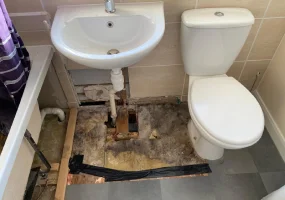
Leak located under bathroom floor
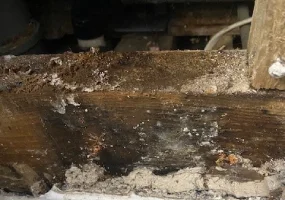
Rotten timber supports
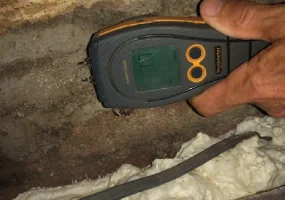
High moisture reading, bedroom wall
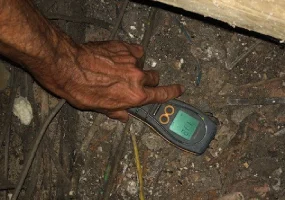
Wet subfloor by bathroom services
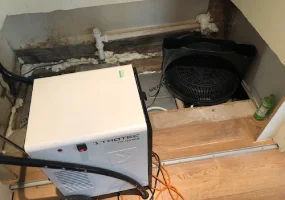
Drying equipment installed and monitored

Claim Back Eligible Leak Detection Costs
Did you know that if your insurance policy includes Trace & Access cover, you may be able to reclaim the cost of leak detection? Through our FCA-regulated firm, we can arrange for these costs to be recovered directly from your insurer – provided there’s an insured peril in place.
And it doesn’t stop there. When structural drying is required, the equipment used can consume a lot of electricity. Professionally accredited drying technicians record this usage so these costs can be reclaimed under your insurance policy where cover applies.
Through our FCA-regulated firm – your claim is managed properly and fairly
No extra cost to you - reclaimed under your policy where cover applies
Hassle-free process - from finding the leak to managing repairs
Don't pay more than you should.
Call us now on 020 3011 0902 or request a callback today.